
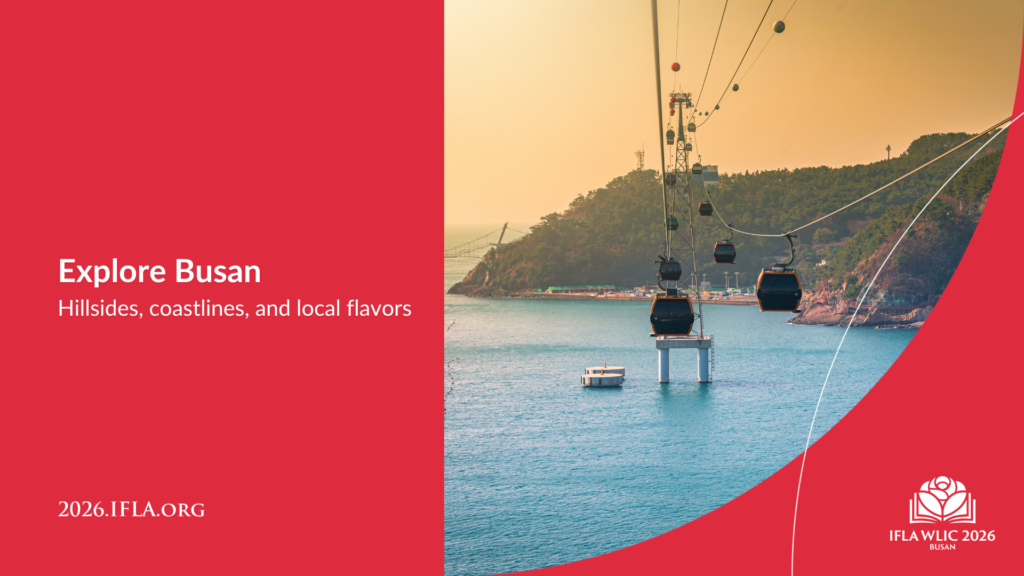
Busan: discover a city where mountains meet the sea and historic neighborhoods stand beside modern skylines!
Beyond the Congress sessions, satellite meetings, and exciting nightlife, IFLA WLIC 2026 delegates can explore Busan’s dramatic landscapes, coastal landmarks, and vibrant local cuisine.
Hillside Neighborhoods
Unlike many coastal cities, Busan stretches across steep hillsides, where neighborhoods open onto wide views of harbors, bridges, and the sea.
Gamcheon Culture Village, often called the Machu Picchu of Korea, is known for its colorful houses, narrow alleys, and hillside murals. Nearby, Huinnyeoul Culture Village runs along the edge of a coastal cliff, where quiet streets overlook the ocean. Breathtaking!
For a sweeping panorama of the city, visitors can head to the Hwangnyeongsan Viewing Lounge, where Busan’s landscape of mountains, bridges, and coastline is especially striking in the evening.
Coastal Landmarks
The sea has long shaped Busan’s identity, and its coastline provides many ways to explore the city.
Glass skywalks at Oryukdo Skywalk, Songdo Skywalk, and Cheongsapo Daritdol Skywalk extend above the water to provide dramatic coastal views.
Further north in Gijang, Haedong Yonggungsa Temple stands on seaside rocks and is one of Korea’s few temples built directly beside the ocean.
Near BEXCO, Haeundae Beach is one of Busan’s most famous beaches. Visitors can follow the coast on the Haeundae Blueline Park beach train or Sky Capsule, while BUSAN X the SKY offers scenic views of Busan’s skyline.
On Saturday evenings, the Gwangalli Marvelous Drone Light Show illuminates the sky above Gwangan Bridge, one of Busan’s most recognizable landmarks.
Local Flavors
Regional cuisine is another way to experience Busan.
Milmyeon, cold wheat noodles served in chilled broth, was created by refugees after the Korean War. Dwaeji Gukbap, a pork and rice soup, also became a local staple during that period.
Bupyeong Kkangtong Market, once known for surplus U.S. military goods, is now famous for its street food. Visitors often try Ssiat Hotteok, sweet pancakes filled with seeds and nuts, and skewers of Eomuk, Korean fish cakes.
Seafood is another essential part of Busan’s food culture, and visitors can enjoy it at Jagalchi Market, where dishes such as Hwe, fresh sliced raw fish, Jogae Gui, grilled shellfish, and Nakji Bokkeum, spicy stir-fried octopus, are local favorites.
During WLIC 2026, Busan invites participants to explore a city where landscapes, culture, and food come together on Korea’s southern coast.
🔗 Resource